Container waterproofing involves treating a shipping container’s roof, seams, and wall joints with rust-resistant primers and flexible waterproofing coatings to stop leaks and corrosion — a service Sky Chemical Services provides for container homes, offices, cafes, and storage units across Karachi.
Shipping containers have become a common, affordable building option in Karachi, converted into everything from site offices and guard rooms to full container homes and cafes. But a steel container was never built the way a concrete roof is, and without proper treatment, water finds its way in through seams, welds, and screw fixings far more easily than most owners expect. This guide covers why containers need specialized waterproofing, how it’s done, and what to look for in a provider.
Why Steel Containers Need a Different Approach
Concrete roofs and steel containers fail in different ways, which is why treating a container like a regular rooftop rarely works long term.
Thermal Movement Is More Aggressive on Steel
Steel expands and contracts more dramatically with temperature swings than concrete does, putting constant stress on seams and any coating applied over them.
Why This Matters for Coating Choice
A rigid coating that works fine on concrete can crack within months on a steel container, which is why flexible, elastomeric systems are almost always the better choice for this kind of structure.
Rust Is the Real Long-Term Threat
Once water gets past a compromised seam, it doesn’t just cause a leak — it starts corroding the steel from the inside, weakening the container’s structure long before the leak becomes obvious indoors.
Common Problems With Untreated Containers
Seam and Weld Failures
The joints where roof panels and corner castings meet are the most common failure points, since these seams flex with heat and are rarely sealed perfectly from the factory.
Condensation Versus Actual Leaks
Steel is highly conductive, so temperature swings between day and night often cause condensation on the interior ceiling — a problem frequently mistaken for a roof leak when it’s actually a separate insulation issue.
Telling the Difference
Condensation typically appears as widespread moisture across the ceiling surface, while an actual leak usually traces back to a specific point directly below a seam, screw, or corner casting.
Rust Streaking as an Early Warning Sign
Rust streaks running down interior or exterior walls almost always mean water has already been getting through a weak point above for some time.
Wall Base Seepage on Ground-Level Containers
Containers placed directly on soil or a poorly drained foundation can develop seepage at the wall base, especially during Karachi’s monsoon season when ground moisture rises around the structure.
How Container Waterproofing Is Done
Rust Treatment Comes First
Before any waterproofing layer is applied, exposed or corroding steel needs a rust-inhibiting primer, since coating over active rust simply traps the corrosion underneath.
Seam Sealing and Flexible Coating
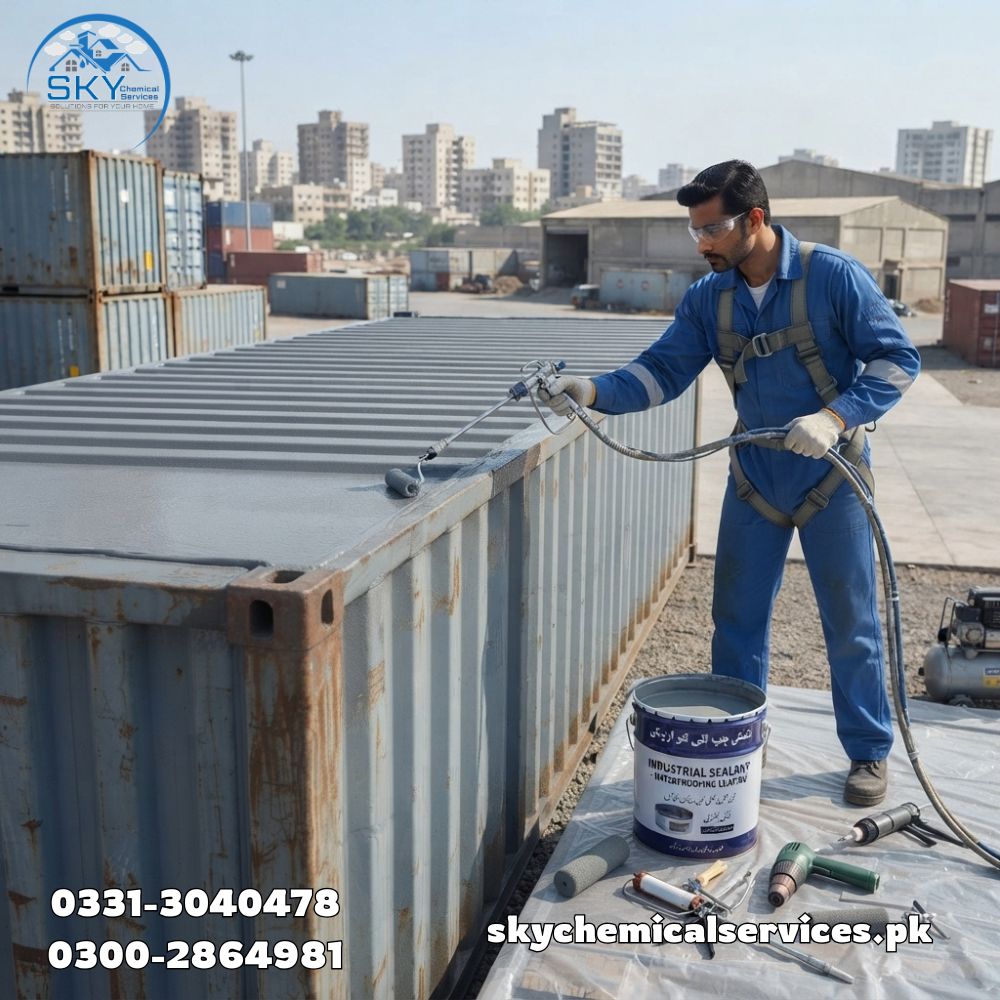
Every seam and joint is treated individually with a flexible sealant, followed by an elastomeric coating across the full roof that can move with the steel instead of cracking.
Why Individual Seam Treatment Matters
A single blanket coating over the whole roof often looks fine at first but tends to fail exactly at the seams first, which is why treating these points separately before the main coating goes on makes a real difference in how long the system lasts.
Heat-Reflective Top Coating
Since steel absorbs and radiates heat far more than concrete, many container conversions used as offices or living spaces benefit from an added reflective top coat to reduce indoor temperature swings.
Read More:
Where Can You Find Affordable Waterproofing Chemical Price?
20 Types of construction chemicals in Karachi
How Sky Chemical Services Approaches Container Waterproofing
Sky Chemical Services treats container waterproofing differently from a standard rooftop project, starting with a full rust assessment before recommending any coating system. With over 11 years of experience across Karachi, the team follows a structured process similar to what they use on concrete roofs — surface cleaning, crack and seam treatment with sealant and fabric reinforcement, a primer base coat applied in multiple layers, and a final flexible coating suited to the steel surface. For containers converted into offices or living spaces, Sky Chemical Services also offers combined heat-reflective coating to help manage Karachi’s intense summer heat on a structure that conducts temperature far more than concrete.
Choosing the Right Container Waterproofing Provider
Ask How They Handle Existing Rust
A provider should be able to explain their process for treating rust before waterproofing, since skipping this step leads to early coating failure regardless of how good the topcoat is.
Confirm Seam Treatment Is Included
Since seams are the most common failure point, ask specifically whether they’re treated individually rather than relying on one general coating across the whole roof.
Look for Experience With Converted Containers
Container homes, offices, and cafes each involve different modifications — window cutouts, added insulation, interior partitions — so a provider familiar with converted containers specifically will spot risks a general contractor might miss.
Final Thoughts
Container waterproofing takes a different approach than a concrete roof — rust has to be addressed first, seams need individual attention, and the coating itself needs enough flexibility to move with the steel. Skipping any of these steps is why so many converted containers develop leaks and rust within a year or two. Working with an experienced provider like Sky Chemical Services means the process is done properly from the start, keeping a container dry and structurally sound for years to come.